

Determination of Total Nitrogen Content in Soil by Dry Combustion (“Elementary Analysis”) with Sundy SDDN636 Dumas Nitrogen Analyzer According to ISO 13878
Introduction
Soil serves as the foundation of agricultural production and an important carrier for the survival and reproduction of living organisms. With the continuous advancement of science and technology, particularly the deepening understanding of soil functions and their ecological roles, the perspective of contemporary soil material cycling helps reveal the biogeochemical nature of elements in soil. This understanding has led to greater emphasis on the dynamic changes of soil nutrient elements and the importance of key elements such as nitrogen in agricultural and ecological systems.
Nitrogen is an indispensable nutrient element for plant growth and has a significant impact on the primary productivity of Earth’s ecosystems. Although nitrogen is abundant in the atmosphere, plants cannot directly utilize it; it must be converted through microbial nitrogen fixation into forms that can be absorbed. The nitrogen cycle in soil is a dynamic and complex process influenced by multiple factors, including soil type, pH, microbial activity, and fertilization practices. Current research focuses on the content, distribution, forms, and migration and transformation mechanisms of soil nitrogen, revealing the profound effects of nitrogen on the environment and ecosystems.
Method Reference
ISO 13878 Soil quality — Determination of total nitrogen content by dry combustion (“elemental analysis”)
Principle
The nitrogen content of a soil pretreated in accordance with ISO 11464 is determined by heating to a temperature of at least 900 °C in the presence of oxygen gas. Mineral and organic nitrogen compounds are oxidized and/or volatilized. The combustion products are oxides of nitrogen (NOx) and molecular nitrogen (N2). After transforming all nitrogen forms into N2, the content of total nitrogen is measured using thermal conductivity.

Instrument and Basic Parameters
1. Apparatus
Combustion apparatus used to determine total nitrogen content at a temperature of at least 900 °C (typically 950 °C in this application), including a detector for measuring the nitrogen gas formed. Consult the relevant manual for the apparatus.
Analytical balance, capable of weighing accurately to 0.1 mg.
2. Method Parameters
The following typical settings may be used.
Combustion tube: 950 °C
Desulfurization tube: 900 °C
Reduction tube: 700 °C
3. Carrier and Combustion Gases
Oxygen gas, high purity (99.999 %)
Helium gas, high purity (99.999 %)
Nitrogen gas, high purity (99.99 %)
4. Reference Materials
EDTA (ethylene diamine tetra-acetic acid) (CAS-No 60-00-4)
5. Consumables
Tin foil cup
Ceramic crucibles
Combustion tube
Reduction tube
Laboratory Sample
Use the fraction of particles less than 2 mm of air-dried soil samples pretreated according to ISO 11464. Use part of the laboratory sample to determine the water content according to ISO 11465.
If a soil mass of less than 2 g is required for nitrogen analysis, mill a representative subsample further, to ensure sufficient milling of the soil concerned.
NOTE — The appropriate size of particles of the test sample depends primarily on the more or less homogeneous distribution and composition of soil organic matter.

Procedure
1. Calibration of the Apparatus
Calibrate the apparatus as described in the relevant manual. For calibration or establishing a calibration graph, use one of the substances.
2. Determination of the Total Nitrogen Content
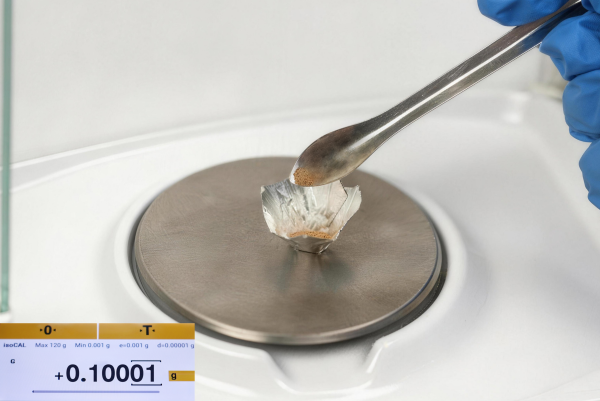
Weigh out about 100 mg of the air-dried sample in a tin foil cup (listed in 5 Consumables). Carry out the analyses in accordance with the instrument operation manual.
NOTE — Soil pores are filled with air and, therefore, with nitrogen gas. Nitrogen gas can also enter the combustion cell when it is opened for sample exchange. Both facts can lead to an overestimation of the total nitrogen content of soil. Therefore, sufficient purging should be carried out by oxygen gas flow before the combustion step.
Typical Results
| Sample | Mass (g) | Total nitrogen content (mg/g) | Range (mg/g) | Mean value (mg/g) | Acceptable variation |
| Peaty | 0.1019 | 13.45 | 0.11 | 13.50 | 5 % relative |
| Peaty | 0.1012 | 13.56 | |||
| Chalky | 0.1016 | 2.64 | 0.10 | 2.69 | 5 % relative |
| Chalky | 0.0996 | 2.74 | |||
| Sandy | 0.1018 | 0.30 | 0.00 | 0.30 | 10 % relative |
| Sandy | 0.1015 | 0.30 |
Summary
The repeatability of the total nitrogen test procedure was evaluated using three soil samples. Duplicate nitrogen content determinations were performed on each sample in two separate consecutive measurements, and the results satisfied the conditions specified in Table 1 of ISO 13878. The SDDN636 Dumas Nitrogen Analyzer meets the requirements of ISO 13878 Soil quality — Determination of total nitrogen content by dry combustion (“elemental analysis”).
For more information about the Sundy SDDN636 Dumas Nitrogen Analyzer, please contact us by phone or email.
Phone: +86-731-88112150
Email: sales@sundytech.com
